
Moving around Sri Lanka is a great fun on its own. It is rather not possible to go there and sit in one place. The island, fortunately not as big offers so many things to see. Sometimes the distances from GoogleMaps may be, however a bit confusing. It’s much easier to use time units than kilometers. The roads, like in other Asian countries are heavy with traffic. I must anyway admit the culture of driving is much more digestible and predictable than in India or Vietnam (what about Napoli or Rome, by the way?). The highest traffic is of course morning and evening but also around 1pm when children are going home from school.
Train
Sri Lanka is famous for its scenic railway network. The network is relatively wide and allows to get to the most popular places. Not necessary always exactly to the place but at least nearby. The equipment is frankly saying old and not really comfortable but charming in a sense. The trains are really slow but usually on time.
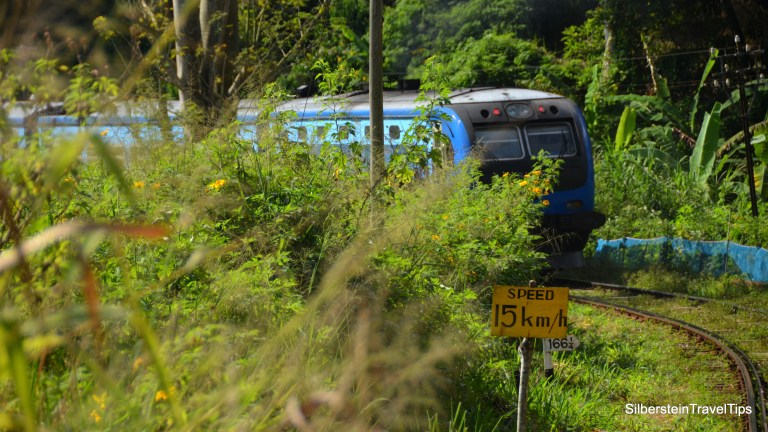
There are several nice and very popular train destination. The most popular seems to be the train to Kandy from Colombo. Most travelers use it as soon as arriving to Sri Lanka as Kandy is often their first destination. Unfortunately this train is overcrowded especially in a high season so getting a seat is a challenge.
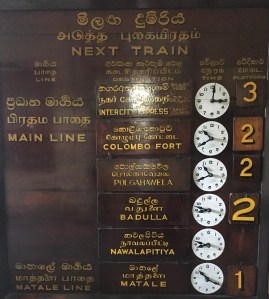
So what about tickets? Good news is the reserved seats tickets may be bought 30 days in advance. Good news for SL citizens only (precisely for those who are physically there as tickets may be bought only in the cashier). So in practice either you ask somebody to buy a ticket for you (for instance your hotel) or you can use some internet agents. Bad news is that the reserved tickets are sold out on the first day of sale. But there is another good news – you can always buy unreserved tickets. Those can never sold out. The tickets are being sold usually 1 -1.5 hours before train departure time. Always class 2 or 3 as the first is reserved seats only. The price for a 5 hours journey is ca 200Rs in the 2nd class (3rd half price, 1st double – simple system).
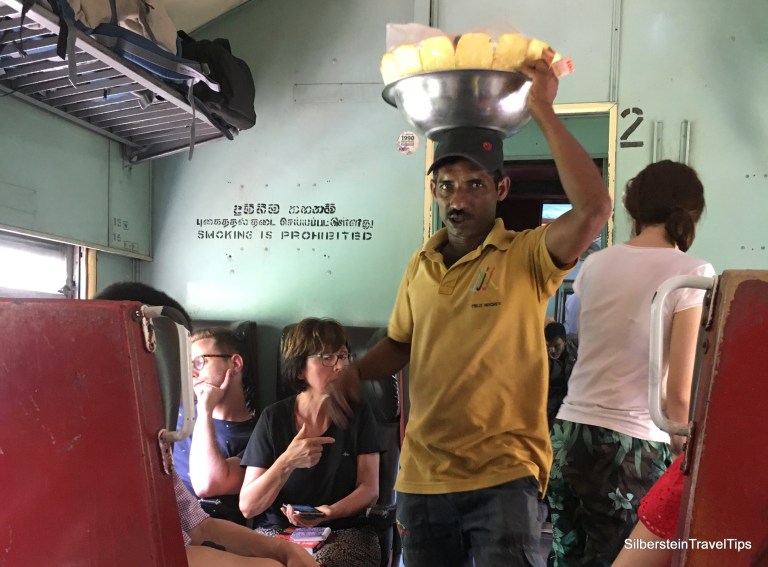
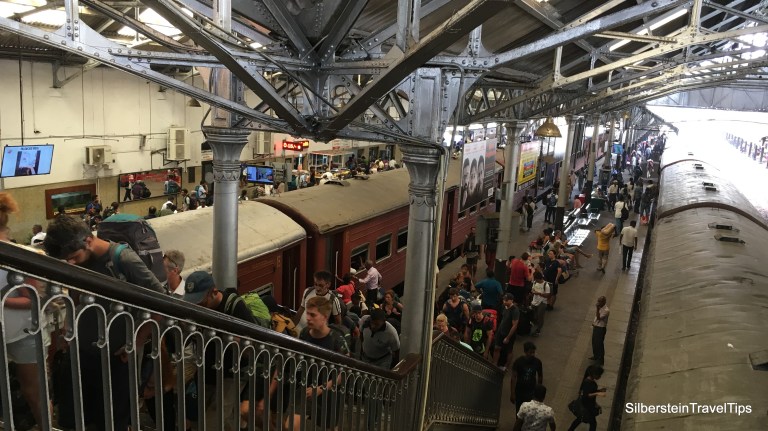
We were fortunate to board a train on the most scenic route from Kandy to Elle (Tea Country). The journey takes 7 hours so you can imagine how desperate we were to find a seat. That’s not at all easy task as the railway station was full with foreign backpackers and the train was coming from Colombo. The boarding was quite dynamic and exhausting considering we had our bags. We helped our luck by finding some young locals who were able to find and keep 2 seats for us. Doesn’t matter we had 2nd class tickets and were sitting in the 3rd. By the way, if you do not have reserved seat buy always 3rd class and hunt for the seat there. The chances are much higher as the crowd comes from foreign tourists who always want 2nd class. The 3rd class gives also opportunity to meet the local people.
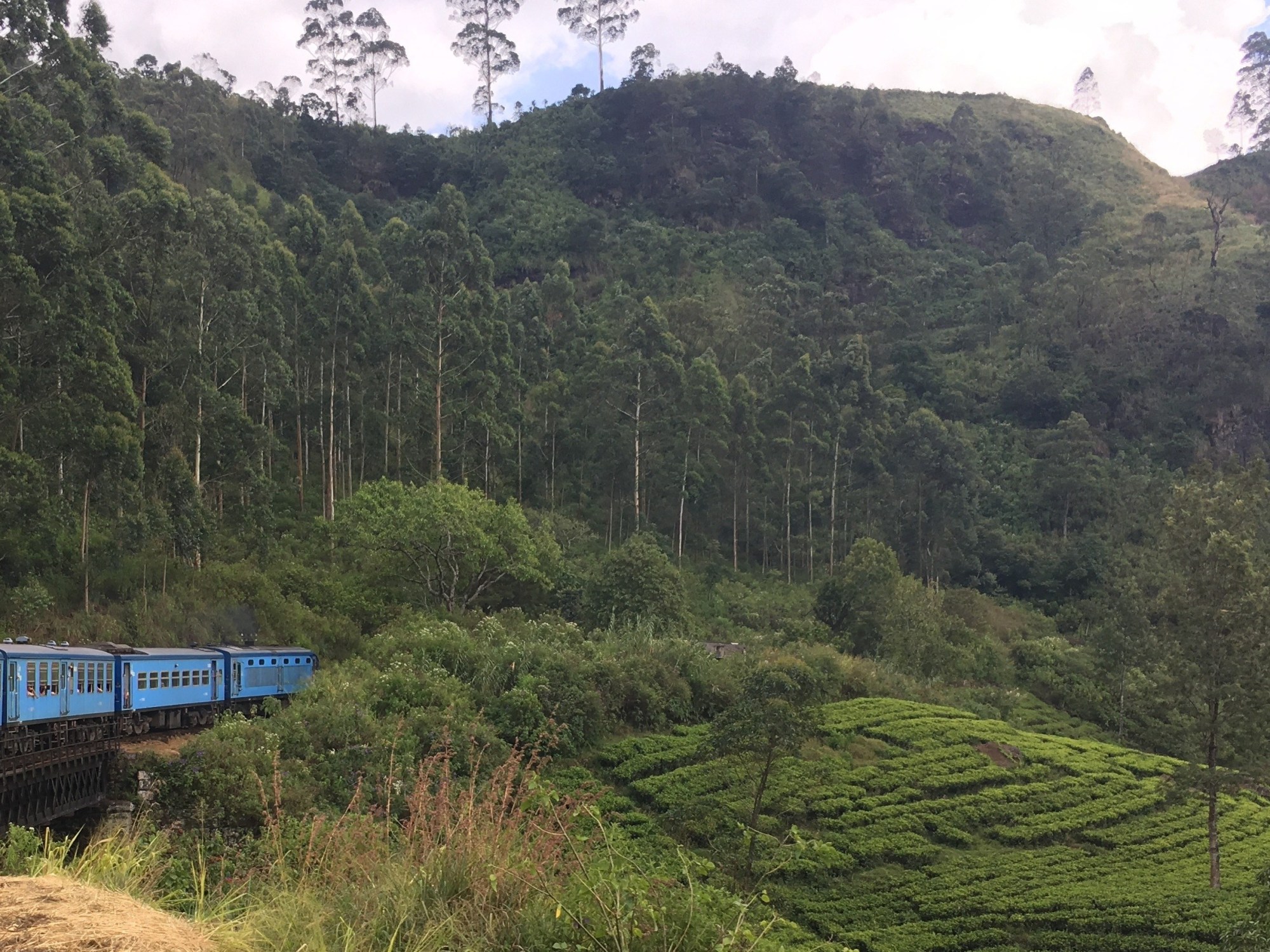
The journey really deserves its eminence. The train steady gains altitude when it goes into the Tea Country. This is almost 7 hours of continuous beautiful landscapes – hills and valleys cover by the endless tea fields. The train itself maybe is not very comfy however, when you look around and see crowd standing everywhere you should not complain at all. The seats are soft – contrary to the wooden benches in the Indian sleeper class.
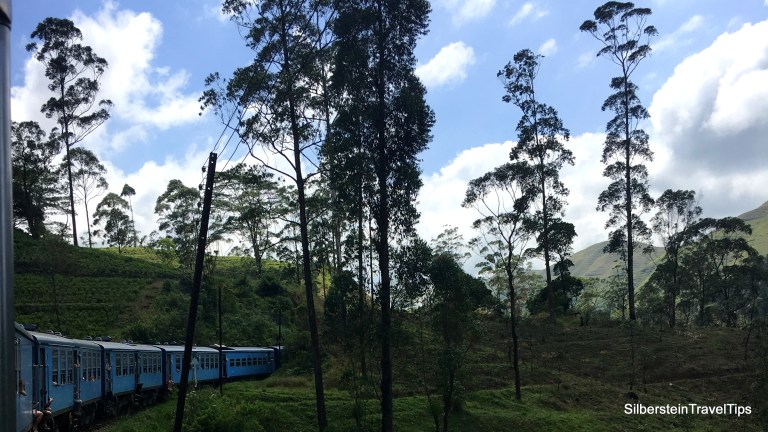
We ended in Elle which is almost at the end of the line (Badulla). More inspiration on what to do in Elle: Sri Lanka|Tea Country: Hiking Around Elle.
The second time we had occasion to travel by train was from Mirissa back to Colombo. This is roughly 3 hours and goeas mainly at the seaside. Note that in Galle the train reverses and the most scenic views are on the left side (seaside).
In the menu section of useful links you will find some helpful sites (timetables, ticket prices, railway systems overview etc).
Bus
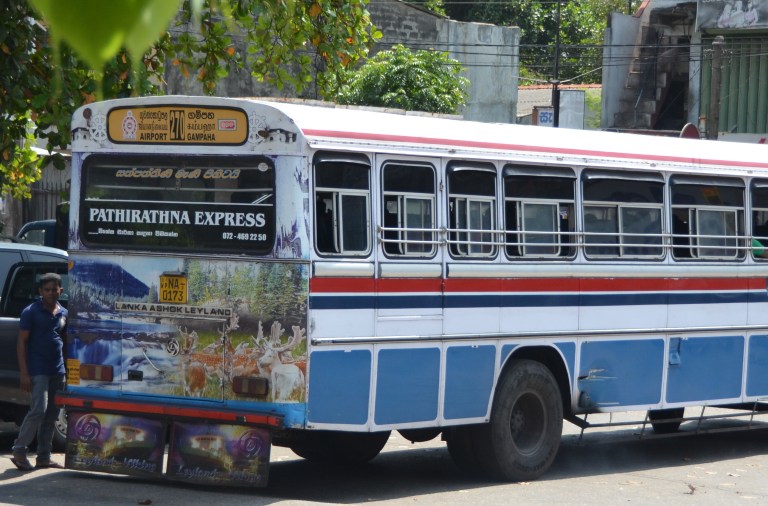
The buses are everywhere, going to every place at crazy speed horning like a mad elephant. Outside they look like colorful 1950’s vehicles. Inside it’s usually party going on – this is the first impression you have hearing loud music and flashing color lights above driver’s head (and endless horn noise as soon as the bus moves on).
This is indeed interesting to look at the front window to discover what religion is behind the owner of the bus. We have travelled with Jesus (to Kandy), with Buddha and Avalokiteshwara (to Dambulla) and with Shiva his wife Parvati and son Ganesha (to Galle). All were flashing and accompanied with loud music.
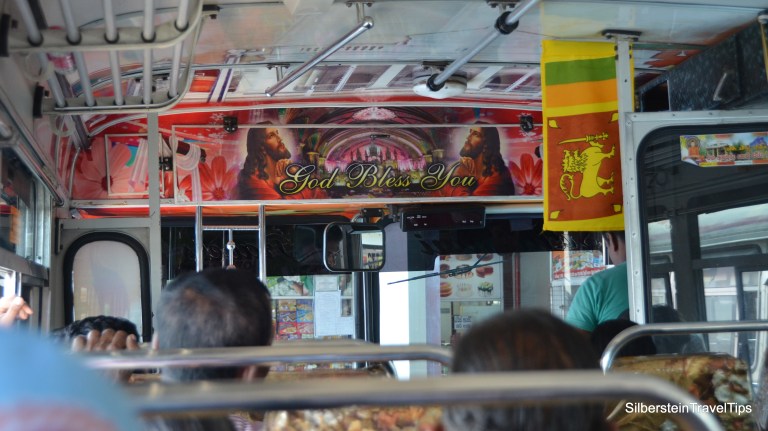
Maybe the above sounds a bit sarcastic but we really enjoyed traveling by bus. In terms of network this is really convenient, however not always the fastest. On the other hand this gives a lot of opportunities to meet local people and observe the country.
In principle there two main types of buses: the public ones (state owned, always red and usually in a bad shape) and private (white with a lot of colors and slightly better technical conditions). The prices are comparable and simply are exceptionally low (the most expensive was a bit more than 200Rs). Usually all towns have a bus terminal in a center but the bus stops are nearly every kilometer along main roads. The bus stops (I mean strongly slows down so you are able to jump in) as you wave for it.
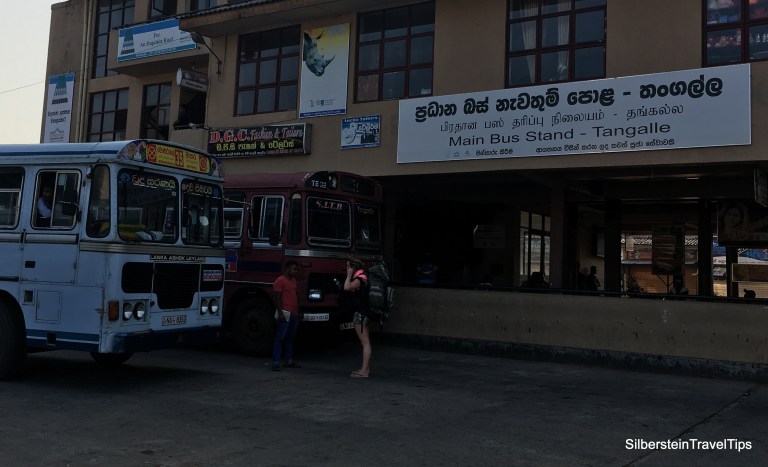
The tickets are sold in the bus as every bus has a driver and a conductor (a tout). Usually you will even get the printout. The conductor will take care of you. The seats are organized on both sides: double on the left and triple on the right side. Don’t be confused, triple means 3 people will seat. And they definitely will. Like in trains the seats are made according to he Asian standards which means some big guys from the States or EU may be surprised when the necessity to compress themselves would emerge. It’s good idea to move your elbow out of the window so you can earn some scarce centimeters (by the way, there is no A/C in general so the windows are always opened).
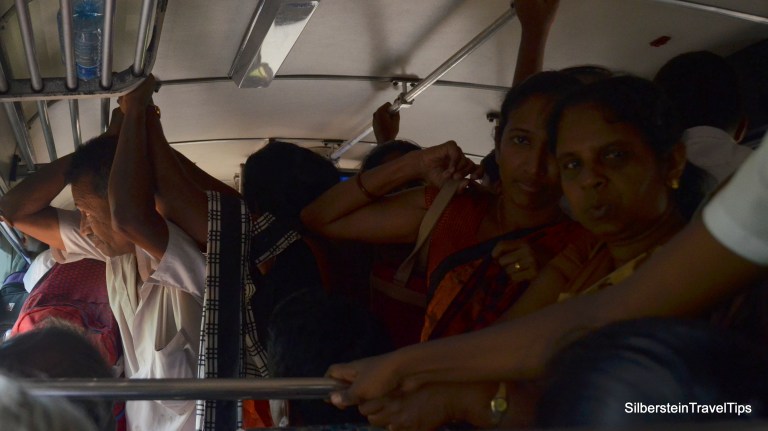
Normally Sri Lankan traffic is high but the vehicles drive with limited speed especially due to poor road conditions and chaos. Like in other Asian countries the principal rule is: the bigger you are the safer you are. That means, simply saying it’s much safer to go by bus than sharing the road with them from the perspective of a scooter or a bicycle. The buses go like crazy and don’t give a shit about anybody on the road. Fortunately they have strong horns and they love their music.
When arriving to the Colombo airport most of travelers aim to go to Kandy. Most prefer train but only few have reserved seats. So very often the only public transport alternative is to take a bus. But note the airport is indeed in Negombo, and Colombo is more or less 1-1.5 hours drive away. Despite the fact that there is a big central bus station in Colombo it’s much more feasible to take a 15 minutes drive by tuk-tuk to the Negombo bus terminal.
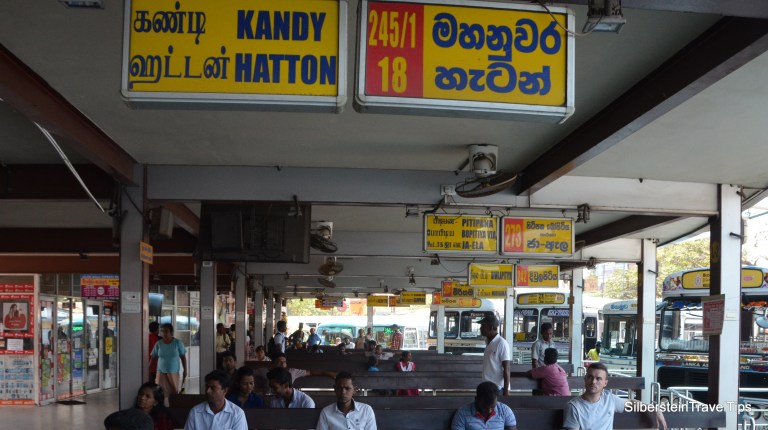
There are a lot of buses going to different destinations from there. Kandy buses go every 1 hour (the journey takes 3 hours). The terminal itself is very well organized and convenient.
Tuk-tuk
Tuk-tuk is a three wheeler or auto rickshaw. This vehicle is common in all Asian countries and is a main transport option for short distances. This masterpiece of technological simplicity is everywhere. Sometimes they move in herds. Their drivers are masters of touting. „Mister, need tuk-tuk?”. „No, thank you „. „Maybe tomorrow?”. In Thailand I saw some people wearing T-shirts with „I don’t need a tuk-tuk, please”.
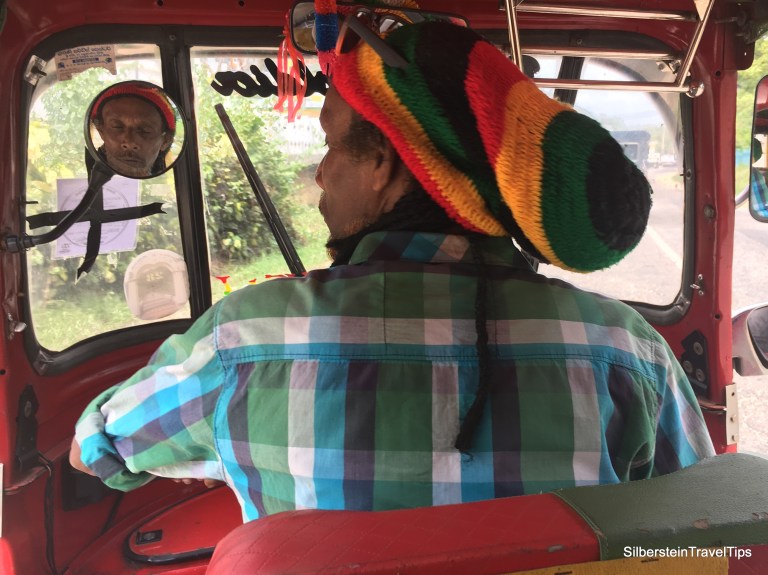
Whatever to say this is very convenient transportation. You can easily go 2 persons with 2 pieces of luggage. The drivers can manage traffic in excellent way so in rush hours it is probably the fastest way to move around.
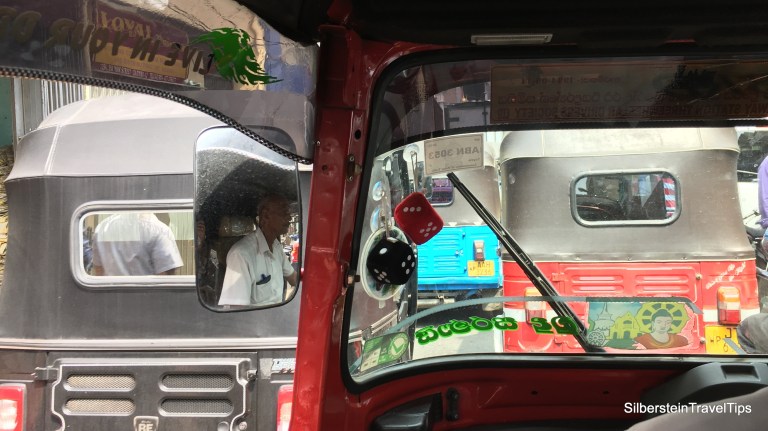
This vehicle is open and not very high. This means you have the feeling of seating on the asphalt breathing directly the fumes and overwhelming dust. And the noise! The word tuk-tuk reflects the music of the 2 stroke engines the little creatures have. It looks they also miss silencers but maybe I’m mistaken.
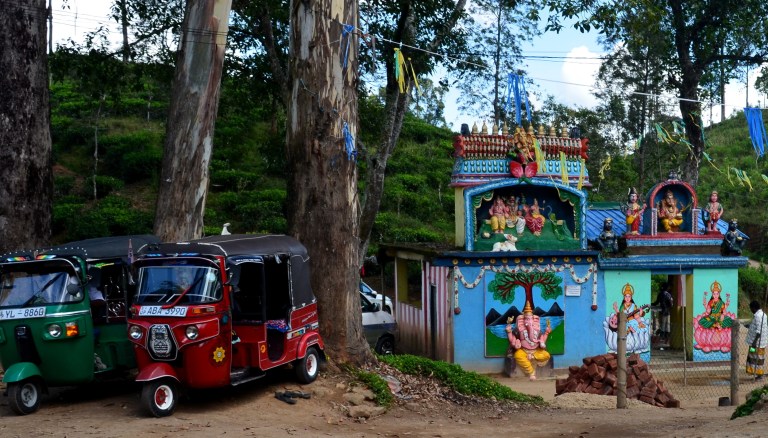
Tuk-tuk may also be hired for a longer distance. We were offered to go from Elle to Udawalawe and further to Tangalle (160km) – that would obviously be a disaster. For some reflections on organizing a trip there see a post: Sri Lanka|Udawalawe National Park: Meet The Mammals
The longest drive by tuk-tuk was from Colombo to Negombo- 40km in more than 1.5 hours in high traffic. The price for that was around 3000Rs. Usually short term (10 minutes) drives would cost up to 200Rs. As always agree on price upfront and negotiate.
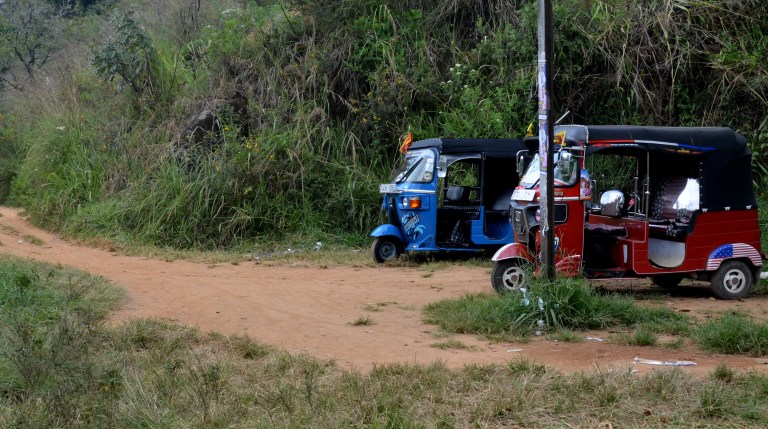
Those 3 transportation options are indeed worth to give them a try. This way of traveling gives some opportunities to touch the local climate, to see the normal live from a shorter distance. However, it is always possible to hire a private driver (7000-10000Rs depending on distance but also on time, including waiting time). For us the possibility to manage our trip with public transport as much as possible was a premium that allowed us to understand Sri Lanka people a little better.
 Wokoło Globusa
Very nice pictures, and good information. We went by train from Kandy to Ella and it is, certainly, a lovely trip.
PolubieniePolubienie
Thanks!
PolubieniePolubione przez 1 osoba
Realy impresive! Practice information and realistic photos.
PolubieniePolubione przez 1 osoba
Dzięki 🙏
PolubieniePolubienie